
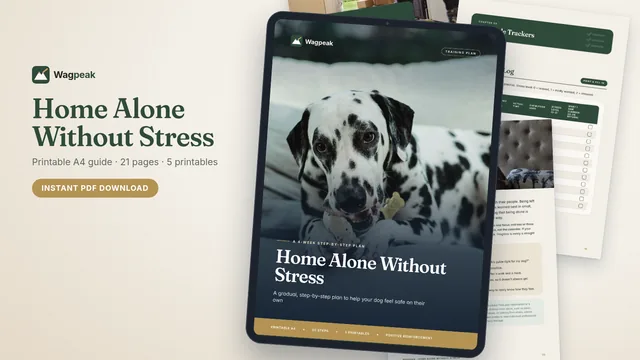
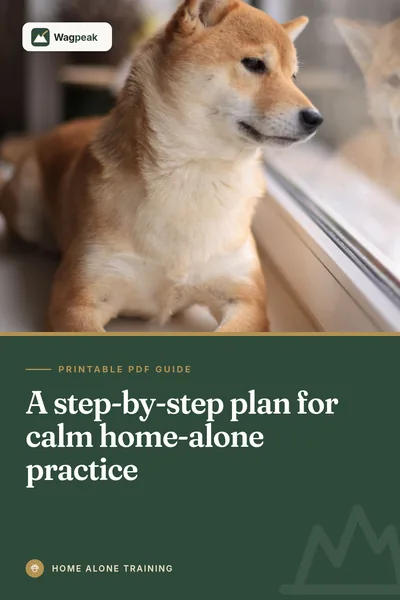
Home alone training: a step-by-step plan to leave your dog alone calmly
Step-by-step home alone training for dogs: leave your dog alone calmly in four stages over about four weeks, with printable log and checklist.
$9
📄 PDF in 14 languages, including English
⚡ Digital PDF · instant download · nothing is shipped
🔒 Secure checkout on Gumroad
What's inside
- Four stages over about four weeks, at your dog's own pace
- Rewarding calm, a quiet alone zone, boring departure cues
- Printable alone-time log, stage tracker, pre-departure checklist
- Weekly review and care plan for longer days
Is this plan right for my dog?
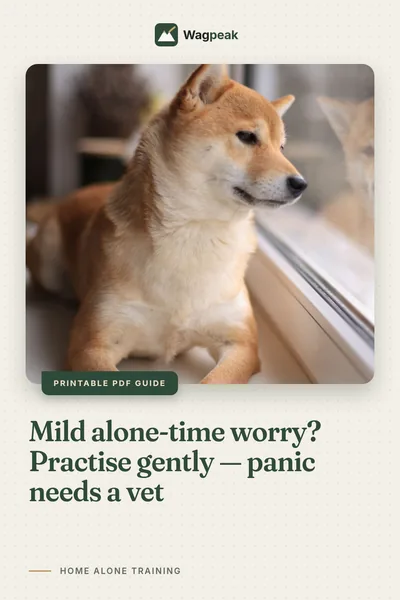
This plan is for dogs who are a bit unsure about being alone, puppies and newly adopted dogs who have never practised it, and dogs who manage short periods but struggle with longer ones. Mild signs include a brief whine after you leave, following you from room to room, restlessness when you pick up keys, or never having been left alone.
If your dog panics, howls most of the time you are away, tries to escape, hurts itself, or toilets from stress despite being house-trained, talk to your vet and a qualified behaviourist first. You can still use the routines and logs in the guide together with them.
Stage 1: calm at home
Week 1 builds calm at home before any real absences. You reward your dog for resting on its own, teach a mat or bed as a quiet place, then take small steps away while your dog stays on the mat with a chew. The first tiny separations are only a few seconds behind a baby gate or door, with calm, boring returns.
Stage 2: making departure cues boring
Many dogs get tense long before you leave, because keys, shoes, coat and bag already mean you are going. In week 2 you pick up those cues and put them down again, open and close the front door without leaving, then practise very short absences of a few seconds behind the closed door. Departures and arrivals stay quiet: no long goodbyes, and a calm greeting only once your dog has settled.
Stage 3: building minutes
Week 3 extends absences in small steps: one to two minutes, then about five, then ten with varied times of day, then fifteen to twenty. You mix shorter sessions in so it does not always get harder, keep the alone-time log, and stay at a level where your dog stays relaxed. If your dog whines briefly and then settles, that can be fine; if the stress continues, you go back a step.
Stage 4: longer absences and everyday life
Week 4 and beyond builds towards the length of time your daily life needs, within what is fair for a dog: thirty minutes, then forty-five to an hour, then longer absences in gradual steps. Departures and arrivals stay calm, and you keep mixing in short practice so longer days do not always follow a hard session.
Printable log, tracker and checklist
The PDF includes an alone-time log to fill in after practice, a stage progress tracker, a pre-departure checklist, a weekly review and a care plan for longer days. Film your dog while you are away when you can: it is the clearest way to see how the practice is going.
FAQ
How do I leave my dog home alone for the first time?
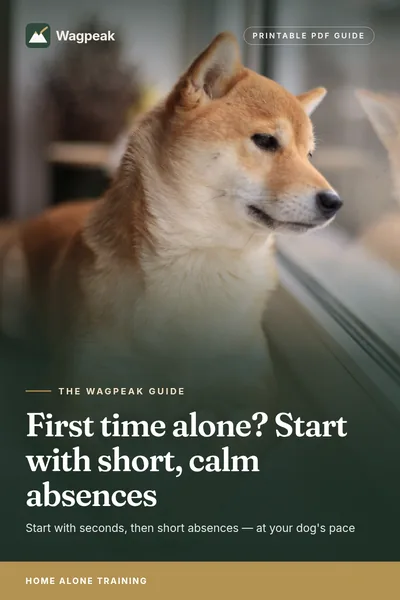
Start with seconds, not hours: step out of sight for a moment and come back calmly, then slowly build up. The plan goes from a reward for resting, via very short absences behind the front door, to minutes and longer absences, at your dog's own pace.
How long does home alone training take?
The plan has four stages over roughly four weeks, but your dog sets the pace, not the calendar. Some dogs need longer, and going back a step is normal.
Does it help with separation anxiety?
It's made for dogs who are a bit unsure about being alone, puppies and newly adopted dogs. If your dog panics, howls most of the time, tries to escape or hurts itself, talk to your vet and a qualified behaviourist first; you can use the logs together with them.
What's included?
A 9-page printable PDF with the four-stage plan, an alone-time log, a stage tracker, a pre-departure checklist, a weekly review and a care plan for longer days. Available in 14 languages, downloaded right after purchase.

⭐ Best value
New in the Family: two guides, one price
Dog & New Baby: Preparation Plan + Dog Sitter Handover Kit – 7 PDF files. $12 instead of $15 when bought separately.
7 PDFs: Dog & New Baby in English and Norwegian + the Dog Sitter Handover Kit in English, Norwegian, Danish, Swedish and German
Goes well with
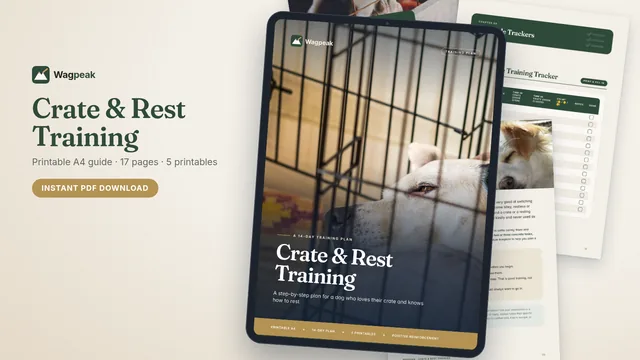
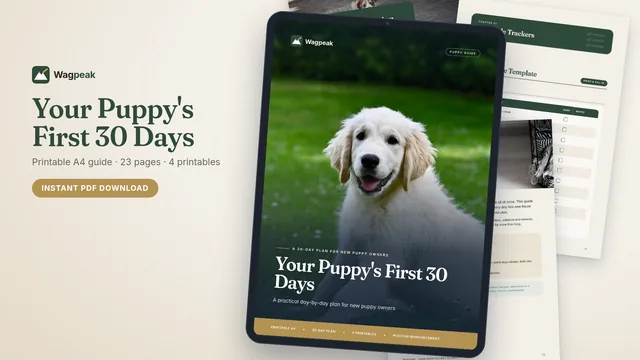
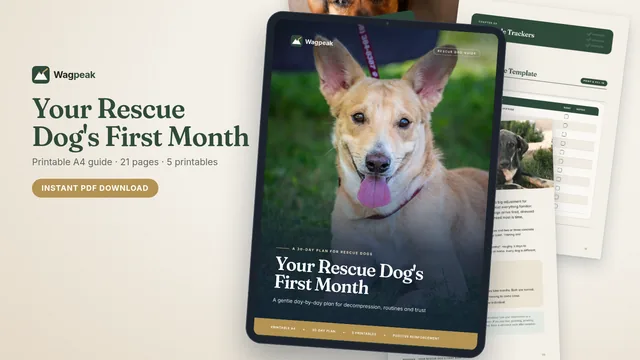
Crate training plan – a calm resting place helps alone time · First 30 days with a puppy – start alone time from week one · Your rescue dog's first month – newly adopted dogs · Dog sitter handover kit – for longer days while you're training · Moving house with your dog – rebuilding alone time after a move
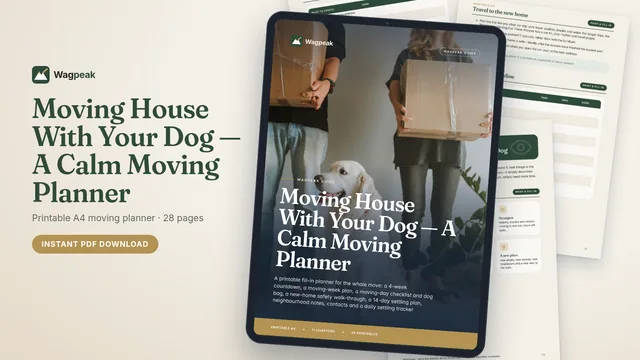
Moving house with your dog – calm moving planner
From 4 weeks before the move to the first 14 days in the new home
$6
Get the guide – $6