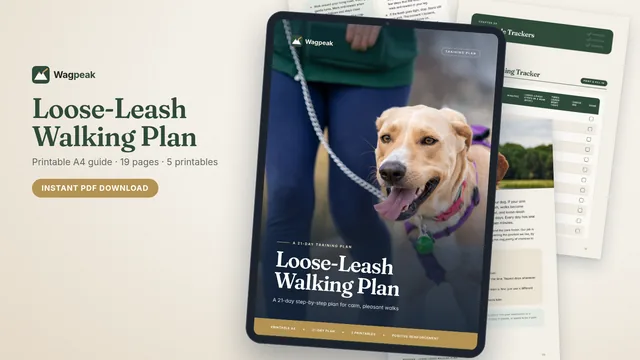
How to stop your dog pulling on the leash: a calm 21-day plan
Stop your dog pulling on the leash in 21 short days: indoor basics, quiet streets, U-turns, sniff breaks and distractions. No punishment tools.
$9
📄 PDF in 14 languages, including English
⚡ Digital PDF · instant download · nothing is shipped
🔒 Secure checkout on Gumroad
What's inside
- 21 days, one clear focus and 2–3 short tasks each day
- Rewarding position, stopping when the leash tightens, U-turns, check-ins, sniff breaks
- No punishment tools
- Printable 21-day tracker, triggers log, weekly review, maintenance checklist
Why dogs pull (and what works instead)
Dogs pull because pulling works: it gets them to the smells, the dogs and the park faster. The plan makes a loose leash the thing that works instead, by rewarding the spot next to your leg, stopping when the leash goes tight, and using sniffing as a reward on cue ("go sniff!").
Before you start: harness, leash, treats and a marker word
Use a well-fitting harness and a standard leash of about 1.8–2 m, plus a 3–5 m long line for sniffing walks, soft treats and a marker word. Avoid equipment designed to cause discomfort, such as choke, prong or electronic collars.
Training walks vs. practical walks
Some days you train; some days you just need to get somewhere. The plan keeps those separate so your dog does not learn that pulling sometimes pays off.
Week 1: indoors and at home
Start without distractions: reward your dog for being next to your leg indoors, then add a few steps with a soft smile-curve in the leash before you go outside.
Week 2: quiet streets and real walks
Move to quiet streets, practise the stop rule when the leash goes tight, add cheerful U-turns and sniff breaks on cue, changing one thing at a time.
Week 3: distractions and everyday life
Add everyday distractions in short sessions, keep rewards frequent at first, and use the printable triggers log and weekly review to see what still needs work.
My dog pulls the moment we leave the house
Excitement is highest at the start. Practise leaving calmly many times, even without going for a walk: walk out, reward, go back in. Put the harness on calmly, leave only on a loose leash, and spend the first two minutes on very easy steps with frequent rewards (Day 15 in the plan).
Printable trackers
A 21-day tracker, milestone checklist, pulling triggers log, weekly review and monthly maintenance checklist help you keep going after the plan ends.
FAQ
How do I stop my dog pulling on the leash?
Reward your dog often for being next to your leg, stop the moment the leash goes tight and move on when it goes slack. Add cheerful U-turns and sniff breaks on cue. Start indoors, then quiet streets, then everyday distractions, changing one thing at a time.
My dog pulls when excited at the start of the walk. What helps?
Practise leaving the house calmly many times, leave only on a loose leash and keep the first minutes very easy with lots of rewards.
Do I need a special collar to stop pulling?
No. The plan uses a well-fitting harness and a standard leash of about 1.8–2 m, plus a 3–5 m long line for sniffing walks. Avoid equipment designed to cause discomfort, such as choke, prong or electronic collars.
Does it work for puppies?
Yes, the steps start indoors without distractions, so they suit puppies and adult dogs. If your dog pulls because of fear, reacts strongly to dogs or people, or seems in pain, contact a professional.
What's included?
A printable A4 PDF (8 pages in English) with a 21-day plan in three weeks (one focus and 2–3 tasks a day, 5–15 minutes), equipment list, household agreement, troubleshooting and maintenance, plus a 21-day tracker, milestone checklist, pulling triggers log, weekly review and monthly maintenance checklist. Downloaded right after purchase. General guidance only; always follow local leash laws.
⭐ Best value
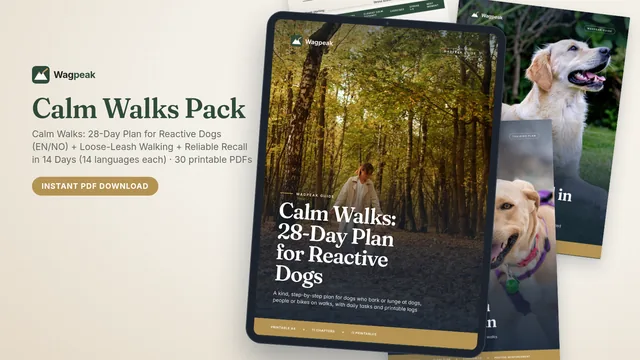
Calm Walks Pack: three plans, one price
Calm Walks + Loose-Leash Walking + Reliable Recall – 30 PDF files. $14 instead of $27 when bought separately.
30 PDFs: Calm Walks in English and Norwegian + Loose-Leash Walking and Reliable Recall in 14 languages each
Goes well with
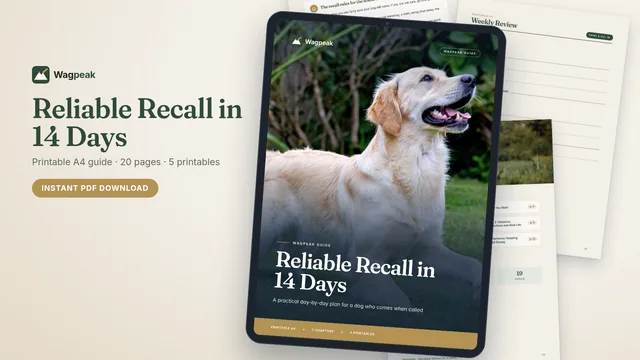
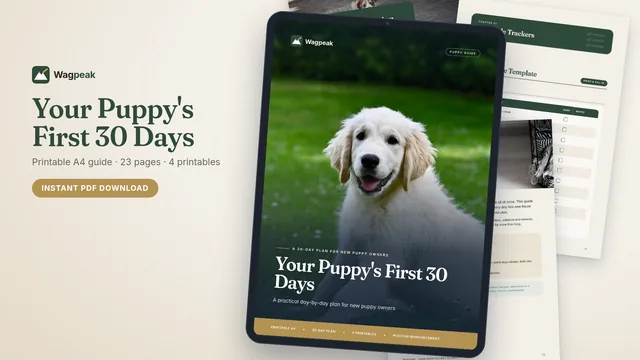
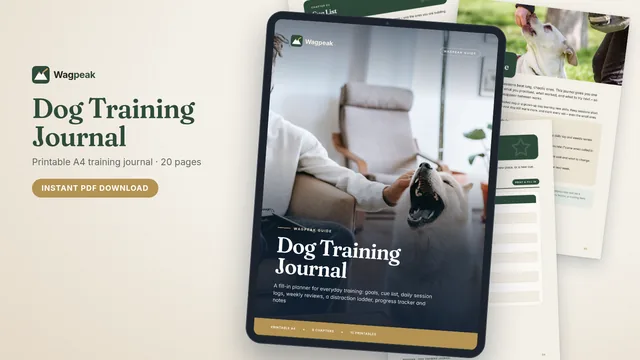
Reliable recall in 14 days · Calm walks for reactive dogs – if your dog barks or lunges at dogs or people · First 30 days with a puppy · Mountain hiking with your dog · Dog Training Journal – log your sessions